
A Country Transformed
Summary prepared by GTEC from the CCCR2026 Report Summary — Environment and Climate Change Canada
Canada released the second edition of its national climate science assessment in 2026, and the picture it paints is stark: the country isn’t just warming — it’s warming faster than almost anywhere else on Earth, and much of what has already changed cannot be undone.
The Headline Number: 2.0°C
Since systematic records began in 1948, Canada has warmed by 2.0°C, while Canada’s North — Yukon, the Northwest Territories, and Nunavut — has warmed by 2.6°C. That’s not a modest drift; it’s roughly twice the pace of global warming since 1970, with the Canadian Arctic warming three times as fast as the global average.
| 2.0°C Canada-wide warming since 1948 | 2.6°C Canada’s North since 1948 | 3× Arctic vs. global rate since 1970 |
The culprit for this outsized northern warming is a phenomenon called Arctic amplification — feedback loops (especially disappearing sea ice, which normally reflects sunlight) that supercharge warming at high latitudes. Scientists are also more confident than ever that this is human-caused: human influence has warmed Canadian average temperatures over 2015–2024 to about 2.2°C above pre-industrial levels — double the human-caused share of global warming over a comparable period.
Wetter, and Not Evenly
Annual precipitation across Canada has increased by about 9.7% since 1949, rising much faster than over global land areas generally, with the sharpest increases — nearly 19% — in the North. This is exactly the pattern climate scientists expect from a warming world: more moisture in the atmosphere, disproportionately loaded onto polar regions.
A Cascade of Connected Changes
The report frames Canada’s transformation as a single interconnected story rather than isolated symptoms. Warming has driven more extreme heat, less extreme cold, longer growing and fire seasons, earlier peak river flows, shrinking snow and ice cover, thinning glaciers, thawing permafrost, warming oceans, and rising sea levels — and the report states plainly that human-caused warming is the only explanation that fits this collective pattern.
Fire and Drought
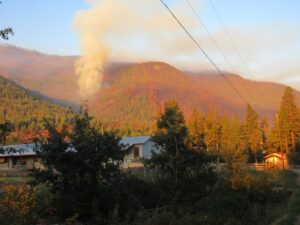
- Fire seasons are already longer and will keep lengthening.
- Summer droughts are projected to become longer, more intense, and more frequent across central and southern Canada.
Water Timing Is Shifting
- Spring is arriving early for the water cycle — snowmelt, peak streamflow, and groundwater recharge are all happening earlier.
- This threatens summer water supplies in places that depend on that meltwater.
Glaciers Are Vanishing
- In western Canada, more than 55% of glacier ice is projected to disappear by 2100 — even if global warming is capped at 2°C.
Oceans Are Changing Chemistry
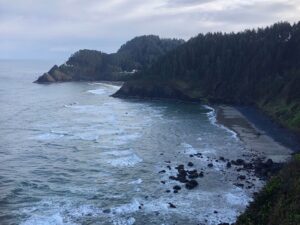
- Canada’s oceans have warmed and acidified, and marine heatwaves have become more frequent and intense.
The Arctic Ocean Could Go Ice-Free
- Under current policy trajectories, there is a greater than two-thirds chance the central Arctic Ocean will be ice-free most Septembers by century’s end.
The Near Term Is Locked In — The Long Term Isn’t
One of the report’s more sobering points is that roughly 1°C of further warming between 2021 and 2040 is essentially unavoidable, regardless of what happens with global emissions now, because the climate system responds slowly to past emissions.
But what happens after that diverges dramatically depending on choices made today. The report lays out three pathways to 2081–2100:
| Scenario | Canada warming by 2081–2100 | Notes |
| Current global policies continued | ~5.0°C | 50% chance Nunavut winter warming exceeds 10°C |
| No climate policies, emissions keep rising | ~6.9°C | Most severe pathway assessed |
| Global net-zero CO2 reached around 2075 | ~3.5°C | Climate stabilizes; extremes level off |
The report describes the current-policies pathway as “far from benign.”
Some Damage Won’t Reverse
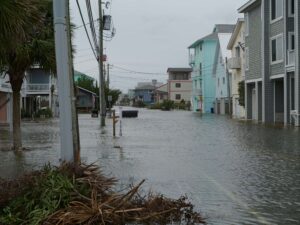
Even in the optimistic net-zero scenario, the report is blunt: glacier melt, permafrost thaw, and sea-level rise will continue for a long time after temperatures stabilize, because these systems respond slowly. Sea level, in particular, will keep climbing for centuries to millennia as heat already absorbed by the ocean continues working its way into the deep sea.
What’s Genuinely New in This Edition
Beyond updated data, CCCR2026 breaks new ground in several ways:
- Indigenous knowledge: place-based case stories from First Nations, Inuit, and Métis authors, documenting Indigenous observations and knowledge alongside the Western scientific evidence base — a first for this assessment series.
- New chapters: large-scale atmosphere-ocean patterns, compound extreme events (like simultaneous heat and wildfire smoke), and the carbon cycle.
- Decision-maker bridge: a dedicated chapter aimed at helping adaptation planners translate the science into local decisions.
The report was authored by over 100 Canadian scientists from government and academic institutions and represents the physical-science foundation for Canada’s broader national climate assessment process — impacts on communities, health, and the economy are addressed in separate companion reports.
Source: Environment and Climate Change Canada. (2026). Canada’s Changing Climate Report 2026 — Report Summary. Government of Canada.
GTEC is at the forefront of solutions to the social and environmental challenges of our time. Our Climate Response Centre will be Canada’s first centre that combines a source of relevant and accessible educational and community development programming, and a centre of evolving community-based expertise about responding to climate change.