
by Arden Henley
Talk about a rupture in the political response, the end of a pleasant fiction and the beginning of a harsh reality, how about the extent to which Canada’s federal government is pretending that we have climate change in hand, that big oil has carbon sequestered and renewables can wait while fossil fuels burn with minimal limits or constraints.
But we want you to know that many people and organizations, ordinary folks and climate change organizations alike, are not powerless. We have the capacity to build a new order that encompasses our values, such as respect for human rights, climate justice, regenerative approaches, solidarity, the territorial integrity of Indigenous communities everywhere.
The power of the less power starts with honesty.
It seems that every day we’re reminded that we live in an era of great corporate dominance, that a shared sense of mutual respect and care is fading, that the strong can do what they can, and the weak must suffer what they must.
And this aphorism of Thucydides is presented as inevitable, as the natural logic of economic and political relations reasserting itself.
And faced with this logic, there is a strong tendency for people to go along to get along, to accommodate, to avoid trouble, to hope that compliance will buy safety and an assured future.
Well, it won’t.
So, what are our options?
In 1978, the Czech dissident Václav Havel, later president, wrote an essay called The Power of the Powerless, and in it, he asked a simple question: how did the communist system sustain itself?
And his answer began with a greengrocer.
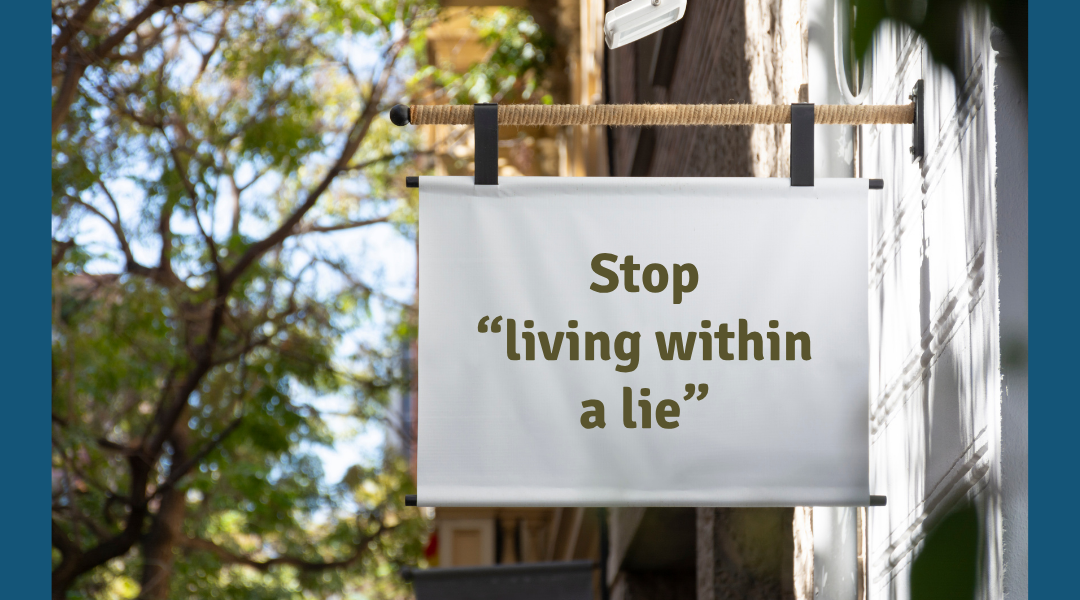
Every morning, this shopkeeper places a sign in his window: ‘Workers of the world unite’. He doesn’t believe it, no-one does, but he places a sign anyway to avoid trouble, to signal compliance, to get along. And because every shopkeeper on every street does the same, the system persist – not through violence alone, but through the participation of ordinary people in rituals they privately know to be false.
Havel called this “living within a lie”.
The system’s power comes not from its truth, but from everyone’s willingness to perform as if it were true, and its fragility comes from the same source. When even one person stops performing, when the greengrocer removes his sign, the illusion begins to crack. Friends, it is time for people everywhere to take their signs down.
For decades, Canada prospered under what was called a resource-based economy. We joined its companies, we praised its productivity, we benefited from the wealth it generated. And because of that, we could engage in our many and various private pursuits of affluence.
We knew the story of the viability of the extractive economy was false, that the strongest would take more than their share and use the legal system to protect themselves asymmetrically. We knew that law was being applied with varying rigour depending on the identity of the accused or the victim.
This fiction was useful, and corporate hegemony, in particular, helped provide public goods, open educational opportunity, a stable financial system, collective security and support for frameworks for resolving disputes.
So, we placed the sign in the window. We worked, we participated in the rituals, and we largely avoided calling out the gaps between rhetoric and reality. We assumed that our leadership was taking care of the environment and assuring the future of the generations that follow.
This bargain no longer works. Let me be direct. We are in the midst of a rupture, not a transition. Pragmaticism is no excuse for exploitation.
Over the past two decades, a series of climate crises, heat domes, floods, wildfire and toxic smoke laid bare the risks of a fossil fuel-based economy. And, we learned, great corporations have deliberately dished out misinformation, misled the public and used their wealth and power to influence government policy.
You cannot live within the lie of the mutual benefit of this type of economy when the way it operates is destroying the planet.
The democratic institutions on which we have relied – our governments at municipal, provincial and federal levels, the architecture, the very architecture of collective problem solving is under threat. And as a result, many people are drawing the same conclusion that they must develop greater strategic autonomy, in energy, food, critical minerals, in finance and supply chains.
And this impulse is understandable. A community that can’t feed itself, fuel itself or take care of itself, has few options. When the rules no longer protect you, you must protect yourself.
But let’s be clear eyed about where this leads.
A world of fragmentation and fortresses will be poorer, more fragile and less sustainable. And there is another truth. If great corporations and governments at all levels abandon even the pretense of rules and values for the unhindered pursuit of their power and interests, the gains from such transactionalism will become harder to replicate.
Hegemons cannot continually monetize their relationships.
People will seek alternative solutions to hedge against exploitation and uncertainty.
They’ll find new ways to work together, increase options to rebuild sanity and security – security that was once grounded in centralized governance, but will increasingly be anchored in the ability to withstand the impacts of climate change at a local level.
We know this from an old story.
See what else we have in GTEC’s Communication & Media (formally GTEC Blog)! Read articles on climate change, sustainability, education, and more!