

Clinical Notes from the Desk of Arden Henley
May, 2024
This article addresses the increasing levels of solastalgia or climate distress, especially among young people in the developed nations. It identifies family and community as sources of sanity and resilience.
Many years ago, I was appointed the Executive Director of a non-profit in the Okanagan that operated a residential treatment centre for children and youth, a group home and an infant development program. I soon learned that the common-sense regime provided by child and youth care workers in treatment centre and group home environments frequently brings the errant behaviour of young people under control. In fact, the very same young person described in the case notes often begins to look quite different. Then, within weeks of returning home after a 3-6 month stint in a treatment centre and/or group home the same disturbed and disturbing patterns of behaviour re-emerge.
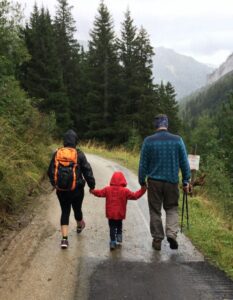 Of course, in some instances the re-emergence of problematic behaviour signalled that undetected abuse was taking place in the family. But, not in a larger number of cases. What was going on in these situations that were not accounted for by abuse? Parent/child or parent/teen conflict as they are often referred to. This question led me to Frances Ricks who was then teaching in the Child and Youth Care program at UVic. She introduced me to family therapy, including seminal books such as Leaving Home by Jay Hayley and led me to training with George Enns, then Canada’s premier family therapist. I shifted the orientation of the treatment centre from individually focused to incorporating work with families. A further evolution in this thinking later took place in White Rock where I established two treatment centres based on this approach, one of which exists to this day over 30 years later. As I worked within the framework of this model my thinking expanded to include school counsellors, other professionals involved with the young person and even support people such as a family’s long-time accountant and financial advisor. The more the network of people involved in the day to day lives of children and youth got on the same page, the more quickly and lastingly changes took place.
The point I want to emphasize, for our purposes, is that sanity and resilience reside in families and communities as much as or more than they do within individuals. The history of psychology invites us to walk backwards with our face to the individual rather than to family and community. We engage in research and generate theory and practice that addresses the individual primarily and, at a distant second, families and communities. My thinking is that we would be wise to see research focused on the strengths and resilience of families and communities as essential and complementary to understanding how individuals can be supported as we face the climate crisis. We need to provide methods and materials that address families and communities. Another, often neglected, key principle I ran across in this work is the importance of supporting change. In the simplest terms, this involves carefully following up and reinforcing resilience, in this case, climate change resilience, as it develops.
Though I think it is well accepted, it probably bears repeating: anxiety, grief, rage and a whole range of related emotional reactions to the climate crisis fall within the normal range from a mental wellness point of view. In my experience, these feeling states are amplified in many young people as they look at an uncertain future. In fact, many experts, such as the Royal Roads University’s Thomas Homer-Dixon situate the climate crisis within an admixture of trends including chronic and unsustainable overconsumption, the human propensity for war and the rise of authoritarian populism worldwide. It is easy to see how an individual young person’s capacity to cope with these reactions could be profoundly impacted by how both their family and community respond. Part of the work, then, is researching the strengths and assets of communities and designing materials and approaches to supporting families and communities.
Image credits:
Feature image balanced rocks: Sean Stratton, Unsplash
Family image: Alberto Casetta, Unsplash
Read articles on climate change, sustainability, education, and more from GTEC’s Communication & Media (formally GTEC Blog)!
GTEC is Building Climate Change Resilience in the Community Social Services Sector to educate, activate and support communities in adapting the impacts of climate change.